One product, two names, three prices
 By Daniela Ricaud, founder of Pretty Citable
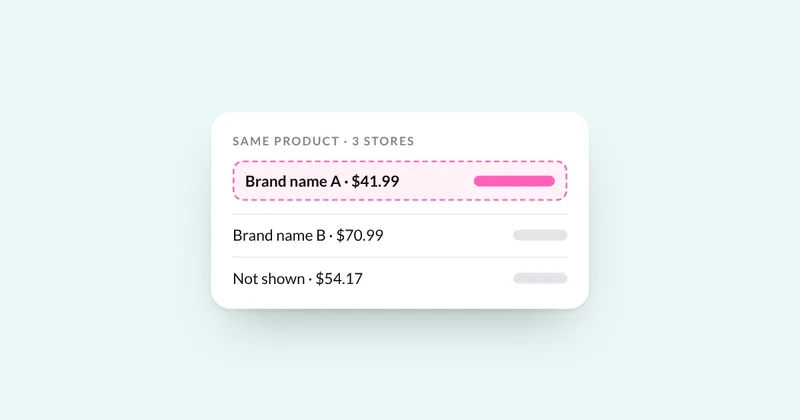
On November 11, 2026, ChatGPT showed one marble tray in a single "Compare offers" panel with three stores: Nordstrom at $41.99 under the brand Olive Grove, Target at $70.99 under the name Storied Home, and Bed Bath & Beyond at $54.17. A shopper saw two brand names and a $29 spread for what ChatGPT presented as one product. Four hours later, another panel put a different $30 set from a second store next to a $48 gift set with almost the same name. OpenAI says ChatGPT builds that list of stores from product data supplied by merchants and third-party providers, and may rewrite product titles because stores use different titles for the same product. To keep your own product from looking like this, give every store the same brand name, title and product identifiers, and know what each one charges.
What the panel showed
For Day 1 of our Who's at the table? series, I asked ChatGPT "Best hostess gift under $50 USD", logged out in a private window, and tapped every product card in the answer. One of them was a round marble tray.
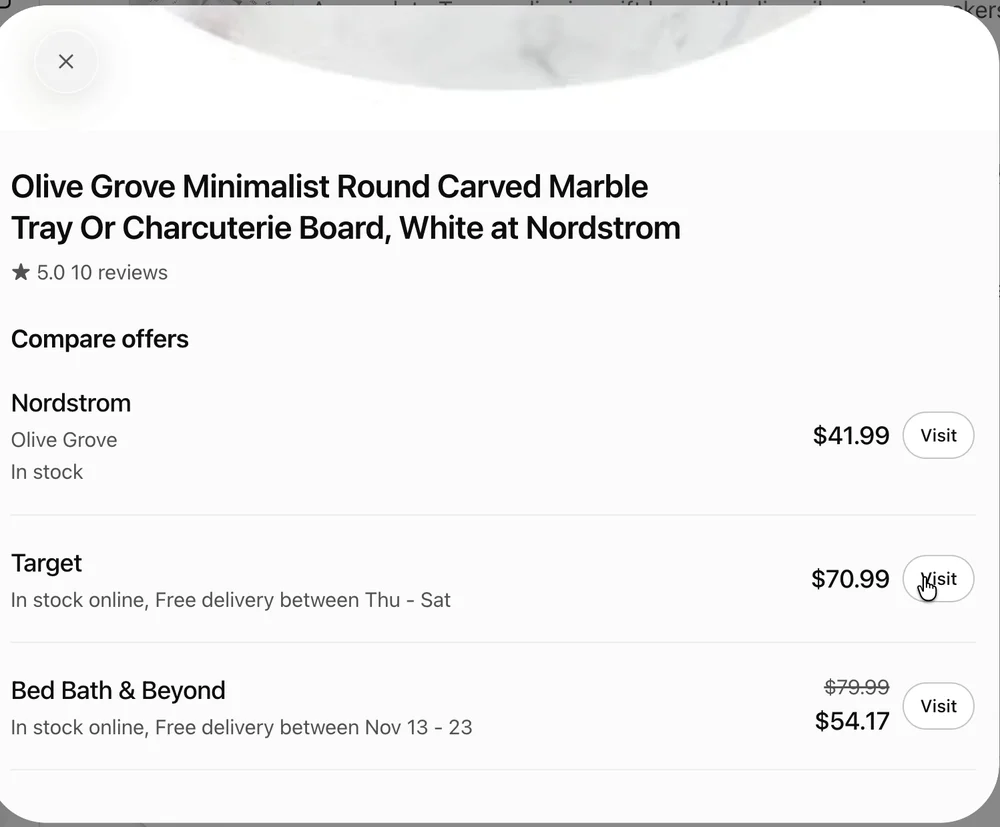
- The title: "Olive Grove Minimalist Round Carved Marble Tray Or Charcuterie Board, White at Nordstrom", rated 5.0 from 10 reviews.
- Nordstrom, $41.99. Nordstrom's own page names the brand Olive Grove and says the tray is sold and shipped by Olive Grove.
- Target, $70.99. Target's own page calls it "Storied Home Minimalist Round Carved Marble Tray or Charcuterie Board, White", with one review.
- Bed Bath & Beyond, $54.17, marked down from $79.99. ChatGPT's link pointed to a category page of serving trays.
ChatGPT showed all three as one product. Whether they come from the same maker, the panel doesn't say, and neither do the store pages.
The same day: two different gift sets, one name
At 1:32 PM I asked again, and ChatGPT named Salt + Stem's Gathered Kitchen Gift Set at $48.00. Tapping it opened a panel with two stores.
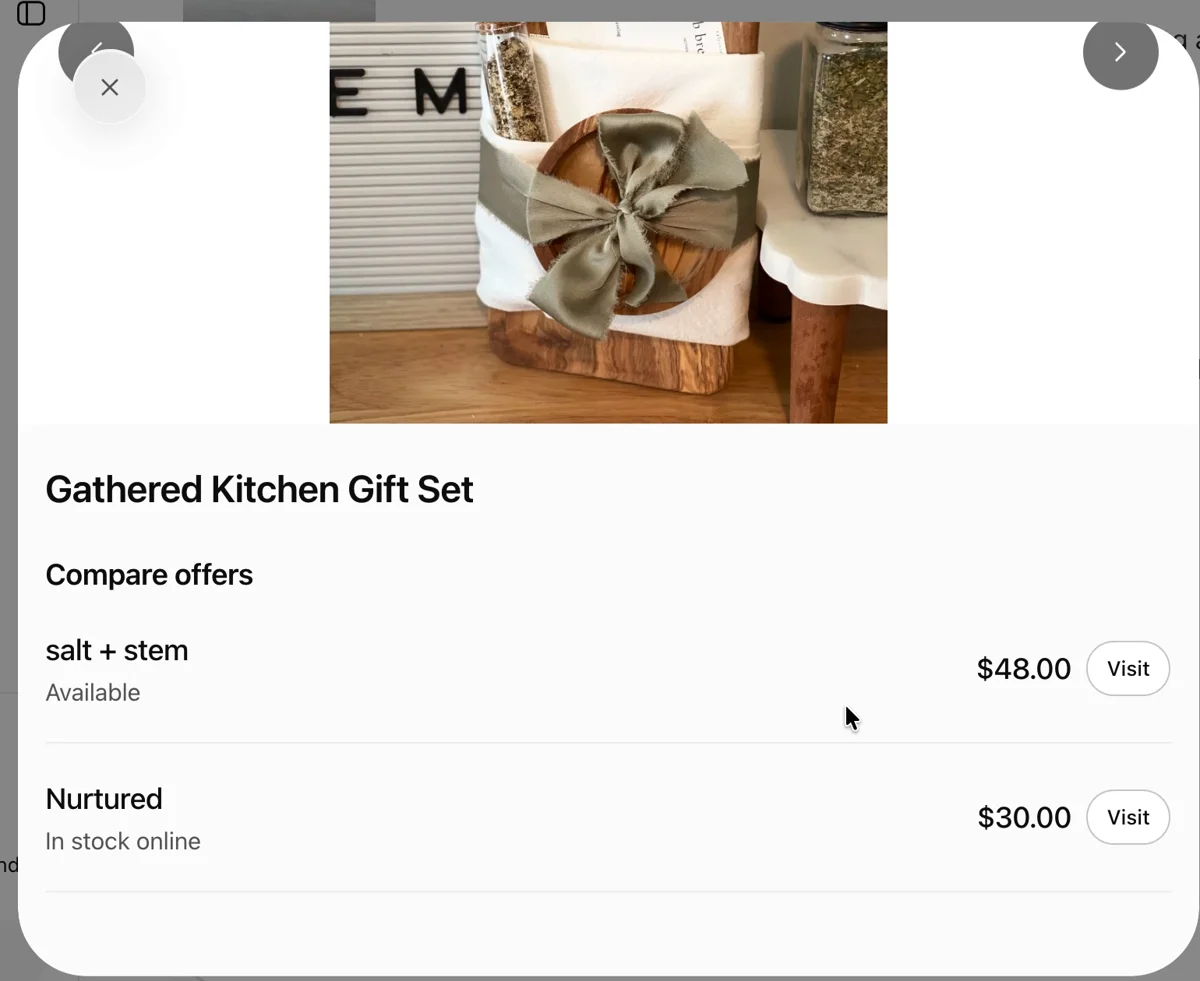
- salt + stem, $48.00. Salt + Stem's own page lists an olive wood serving board, its herb blend, a recipe card and a wooden spreader.
- Nurtured, $30.00. Nurtured's own page sells "The Gathered Kitchen Gift Set": a striped cotton oven mitt and a stainless steel measuring spoon set.
Two different products from two different stores, shown as one, with the cheaper one listed second. The only thing they share is the name.
Why this matters if it's your product
- The shopper sees two brands. One name builds recognition. Two names in the same panel leave the shopper guessing which one is real.
- The price gap is right there. $41.99 and $70.99 sit two lines apart. OpenAI says the lowest offer may get a "Best price" label when more than one store sells a product.
- Reviews don't add up. The panel showed 5.0 stars from 10 reviews. Target's own listing had one.
- A link can miss the product. A link to a category page makes the shopper search again.
What OpenAI says about titles, brands and stores
- ChatGPT may write simplified product titles and descriptions from third-party data, because merchants often use different titles for the same product.
- After a shopper selects a product, ChatGPT may list other merchants offering it, at the same or different prices.
- That list is built from merchant and product data supplied by third-party providers or by merchants directly.
- In OpenAI's product feed spec, brand is a required field for every product.
- Shopify stores are connected through Shopify Catalog. Other merchants can apply to share a product feed.
How to keep your listings matched
- List every place your product is sold. Your site, Amazon, marketplaces, and every retailer and wholesale account.
- Give each product a name only you use. "Gathered Kitchen Gift Set" was also another store's product name. Adding your brand to the title, or a name nobody else sells under, keeps your product in its own panel.
- Use one brand name, spelled the same everywhere. Same spacing, symbols and capitals on every listing and in every feed.
- Send retailers one product title and the same identifiers. Your SKU, plus GTIN or UPC barcodes if you have them. OpenAI's feed spec has fields for GTIN and MPN next to brand and title.
- Know what every store charges. Marketplace sellers can set their own prices. Decide which gaps you can live with, and fix the ones you can't before a holiday sale.
- Tap your own product in ChatGPT. Ask your buyers' questions, logged out, and tap your product when it shows up. If it doesn't, ask for it by name. Here's what the panel shows and how to read it.
Want this checked for you?
The AI Visibility Audit includes a listing check: I tap your hero product and your next two bestsellers in ChatGPT and flag every store, price or product name that doesn't match your site, alongside 30 of your buyers' questions on four AI engines. Or start with the free 60-second check.
Sources
- OpenAI Help Center: Using shopping research in ChatGPT
- OpenAI Help Center: Shopping with ChatGPT Search
- OpenAI developers: Product feed reference
- Pretty Citable: What shoppers see when they tap your product in ChatGPT (Nov 11, 2026)
See where your brand stands
Run three buyer questions yourself in 60 seconds, or get the full AI Visibility Audit: 30 questions on four engines, a competitor map and a ranked fix list in 5 business days.