How to prove to leadership that AI visibility is working
 By Daniela Ricaud, founder of Pretty Citable
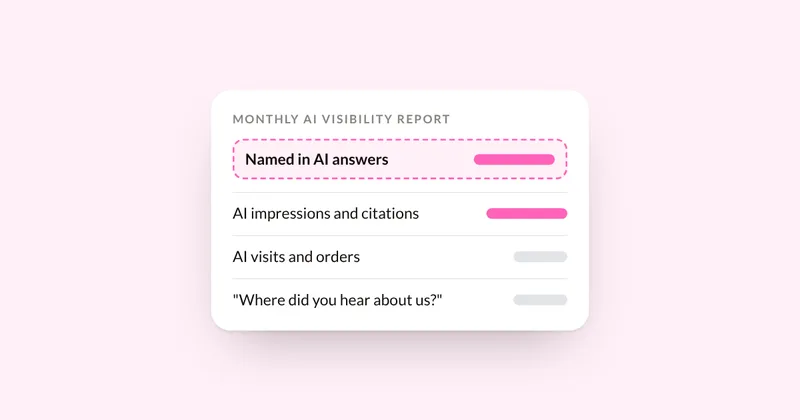
Record a dated baseline before any work starts, then report the same five numbers every month: how many of your buyers' questions name you in AI answers, your AI impressions in Google Search Console, your citations in Bing's AI Performance report, the visits and sales AI sends you, and what new customers say when asked where they heard about you. Present the first three as early signals and the last two as revenue proof, and compare every month with the baseline.
Record the before, first
Leadership trusts a change it can see against a starting point. Before any fix ships, save your month zero:
- The questions and the answers. Write 15 to 20 questions your buyers really ask, ask each one in ChatGPT, Google AI Mode, Perplexity and Claude in a clean session, and save every answer as a dated screenshot. Write down every brand each answer names. Here's the method.
- The platform numbers. Export the last three months from Google Search Console's AI report, Bing Webmaster Tools' AI Performance report, and the AI Assistant channel in GA4.
- Your sales numbers. AI referral orders and revenue from Shopify or your store platform, and your total revenue for the same months.
Keep it in one folder with the date in the name. Every number you report later gets compared with this.
The five numbers for your monthly report
- Share of answers. Out of your fixed questions across four engines, how many answers name your brand, and which brands get named when you don't. It's the closest thing to what your customers actually see. AI answers change from one run to the next, so compare monthly totals and keep the screenshots behind them.
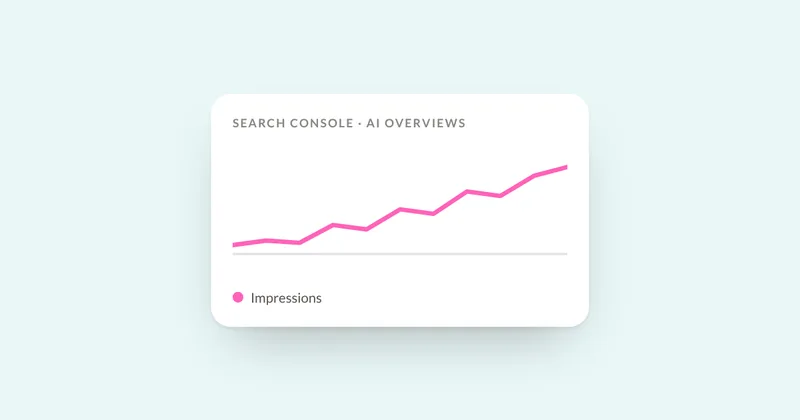
- Google AI impressions. Since June 3, 2026, Search Console has a Generative AI performance report showing how often your pages appeared in AI Overviews and AI Mode, by page, country, device and date. It shows no clicks and no questions, and AI Overviews and AI Mode are counted together. Here's how to read it.
- Copilot and Bing AI citations. Bing Webmaster Tools' AI Performance report, in public preview since February 2026, counts how often Microsoft Copilot, Bing's AI summaries and some partner integrations cite your pages. It lists the cited pages and the grounding queries, which are the phrases the AI used to find your content. Bing has since started adding citation share, the portion of citations your site captures for a grounding query. It shows no clicks and doesn't cover ChatGPT.
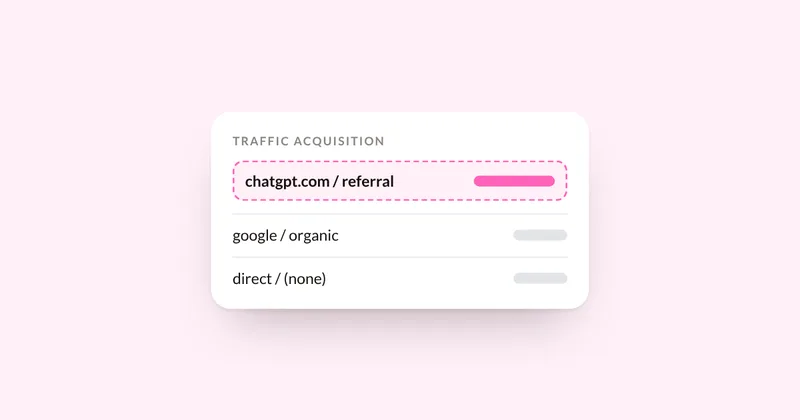
- AI visits, orders and revenue. The AI Assistant channel in GA4 and Shopify's sales by referrer show the visits and sales AI sends you. These numbers run low, because many visits from AI answers arrive with no referral data and get counted as direct traffic. Here's the GA4 and Shopify setup.
- What new customers tell you. Ask "Where did you first hear about us?" after checkout, and include ChatGPT or another AI assistant as an option. It catches the buyers your analytics can't see. Here's how to set it up.
A sixth number is coming. OpenAI is testing a business dashboard with daily ChatGPT mention and click counts. Add it to the report once it launches. Here's what early reports say it will show.
Label which numbers are early signals
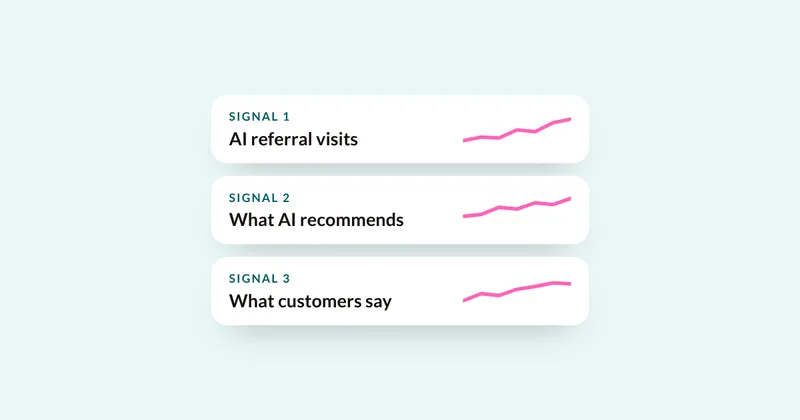
Share of answers, Google impressions and Bing citations show whether AI can find and recommend you. Visits, orders and survey answers show whether that turned into money. Put them in two separate rows of the report, labeled "Early signals" and "Revenue", so nobody expects sales from a fix that shipped last week.
Keep the revenue row in proportion. AI still sends under 1% of ecommerce traffic in the studies that measured it, so show AI revenue next to total revenue. The case for paying attention is quality: Adobe found that visits to US retail sites from AI assistants converted 90% better than other traffic in September 2026. Here's what the conversion studies show.
How to present it on one page
- Use the same layout every month. Leadership learns where to look, and changes stand out.
- Open with one plain line. How many of your questions named you this month, compared with last month and with the baseline. Put one before and after screenshot of the same question next to it.
- Show who got named when you didn't. Leaders pay attention to competitors, and the list tells them what you're up against.
- List what changed that month. Fixes shipped, pages published, mentions earned. Line them up with the numbers, and say plainly that AI answers also move for reasons nobody controls.
- Keep the questions fixed for the year. Track new questions in a separate section, so the main count always compares like with like.
What to leave out
- A single screenshot as proof. One answer can change next week. Show the count across all your questions, with the screenshots as backup.
- A score nobody can check. If a tool gives you one number with no questions or answers behind it, leadership can't rerun it, so it won't hold up when someone pushes back.
- Promises about rankings. Nobody can guarantee where AI names a brand. Report what you measured and what you changed.
I run this report on my own site
Pretty Citable's public scorecard shows the baseline for this site. The first check, on November 8, 2026, asked 5 buyer questions and found Pretty Citable named in none of them. The scorecard also shows the Search Console and Bing results, and the first monthly check is scheduled for December 1. If you want that baseline recorded for your brand, an AI visibility audit does it across ChatGPT, Google AI, Perplexity and Claude, with every question, answer and brand named saved in your report.
Sources
- Google Search Central: Introducing Search Generative AI performance reports (June 3, 2026)
- Bing Webmaster Blog: Introducing AI Performance in Bing Webmaster Tools Public Preview (Feb 2026)
- Search Engine Journal: Bing Webmaster Tools adds AI citation performance data (Feb 9, 2026)
- Search Engine Journal: Bing rolls out AI citation share in Webmaster Tools
- Search Engine Journal: Google Analytics adds AI Assistant as a default channel group
- Google Analytics Help: understand (direct) / (none) traffic
- Shopify Help Center: traffic reports
- Adobe: AI traffic delivers higher revenue per visit to retail sites, Oct 29, 2026
- Similarweb: 3rd Annual Global Ecommerce Report press release, Sep 15, 2025
- Ahrefs: How stable are AI citations? 37,500 citations tracked for 20 days
- Digiday: ChatGPT is about to show brands their mention count (Nov 9, 2026)
See where your brand stands
Run three buyer questions yourself in 60 seconds, or get the full AI Visibility Audit: 30 questions on four engines, a competitor map and a ranked fix list in 5 business days.